Explanation
A flashcard program for a few writing systems, meant to be as simple as possible. Learn a script quickly enough to sound out signs, or as a start on the language.
Japanese
Japanese is written in three scripts. Hiragana is for Japanese words and grammatical endings. Katakana is for emphasis and for words borrowed from other languages, mostly English, which is why a traveler can read so many signs with it. The third is kanji, which writes meaning. ScriptSprint teaches the first two.
Katakana and hiragana each have their own cards, a speed test, and, for katakana, two hundred loan words. The loan words are reading practice: the long vowel mark, the small characters, and the doubled consonants, attached to words you already know in English.
The first line on the back of a card is romaji. It writes the sound in the Roman alphabet, for a reader who does not know the script yet. Romaji is a reading aid, not a Japanese script. The line under it is a pronunciation guide. Romaji keeps the customary r, as in ra, ri, ru, re, ro. The guide writes that row with l, because l is closer to the Japanese sound.
Korean
Hangul was designed to be learned. The cards are the letters and the syllables, then sign words, loan words and common words. Pronunciations use the International Phonetic Alphabet. On a card, that is the smaller line, between slashes. The line above it is the usual romanization.
Greek and Cyrillic
Each one is the alphabet, then sign words, a short list of loan words, and fifty words of basic vocabulary. Borrowed words are not as common in either language as they are in Japanese, so those lists stay short. The vocabulary is reading practice — the sounds that are not English, and the stress — rather than a course in the language.
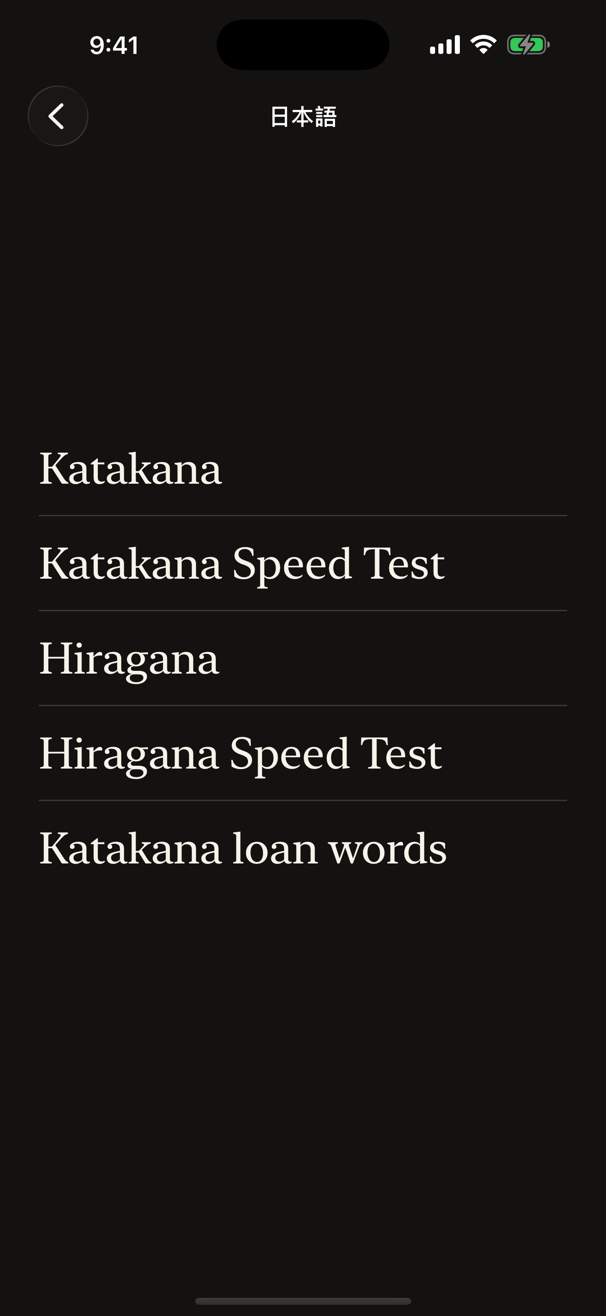
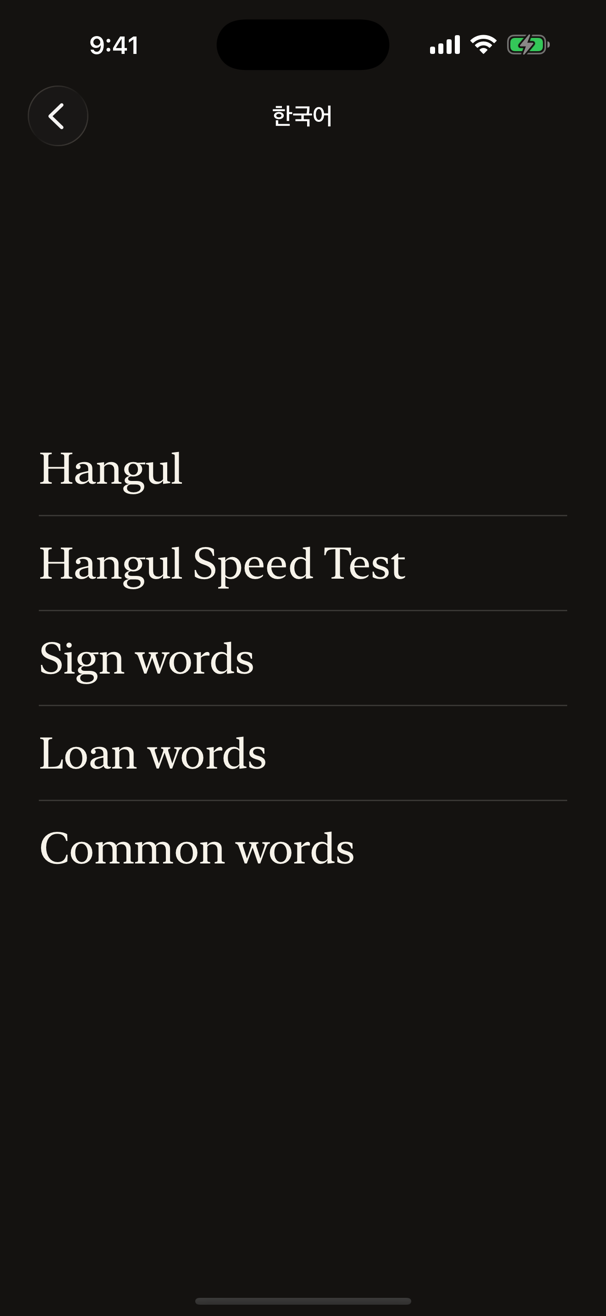
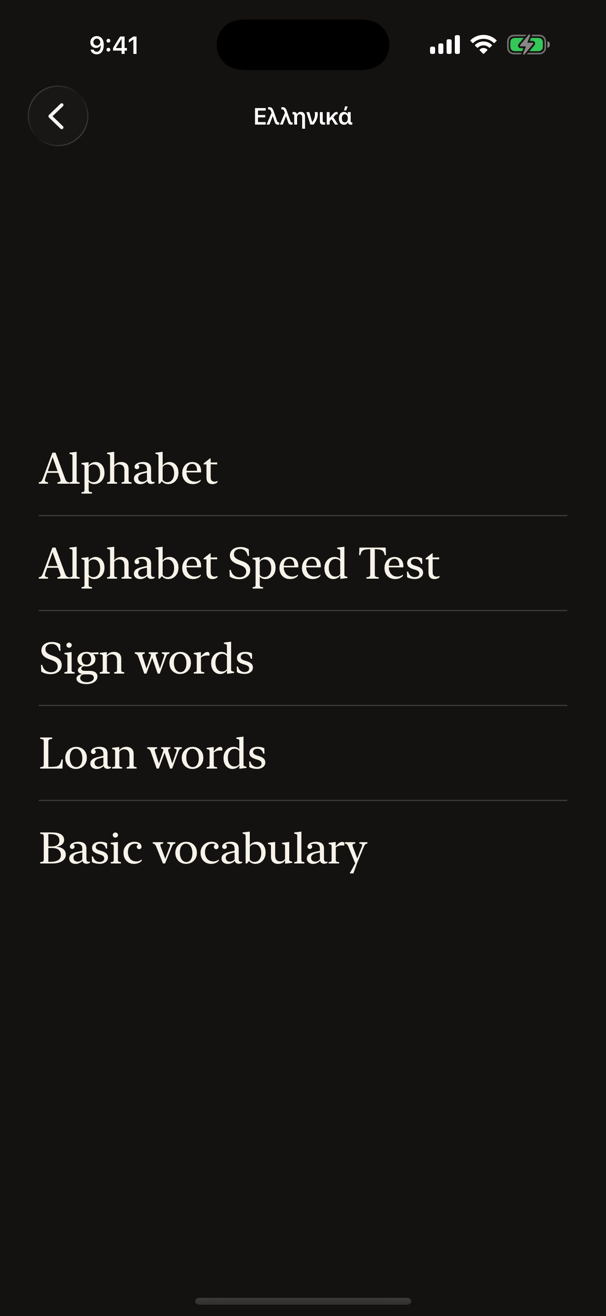
What each language offers. Korean, Greek and Cyrillic share one shape; Japanese has its own because it has two scripts to learn.
How a card is graded
A card shows a character. You answer it in your head, tap to flip, and tap a circle for how well you knew it. Red means you don't know it. Orange means you are somewhat confident. Green means you are sure. That grade is what moves the card between trays, and you choose which tray to study.
Recognition shows the symbol and asks for the sound. Production shows the sound and asks for the symbol. Each direction keeps its own grade. A speed test times a clean run through a group and keeps the last five times.
The ScriptSprint page has the rest, including what is stored on the phone. Questions go to support@trilog.app.
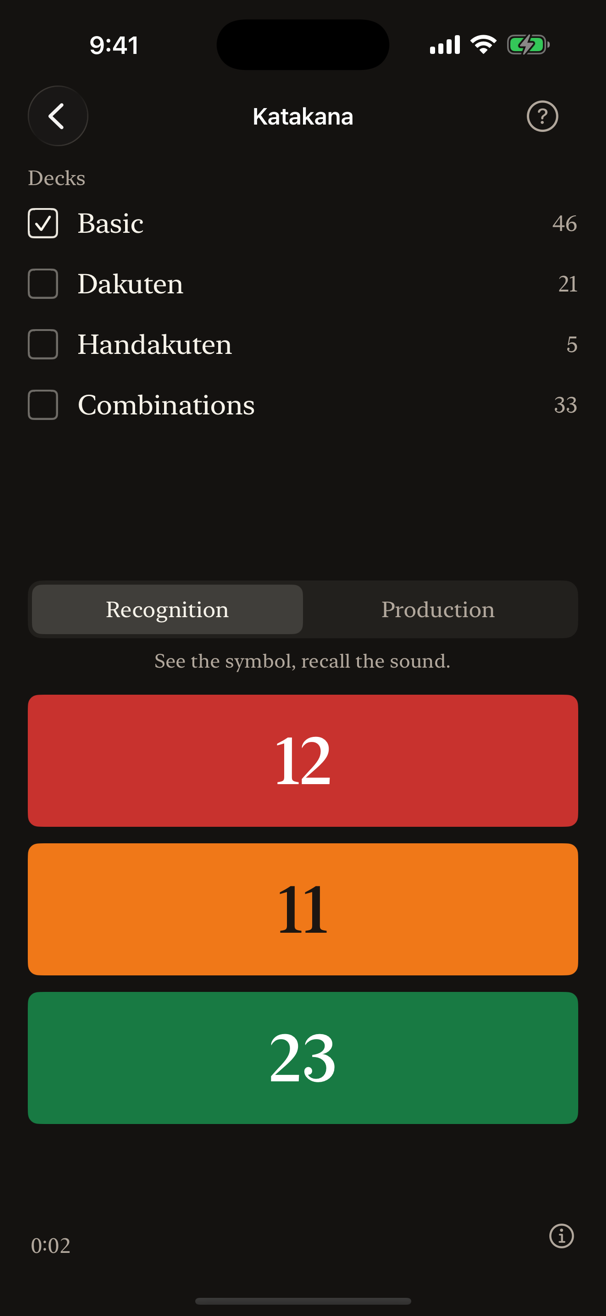
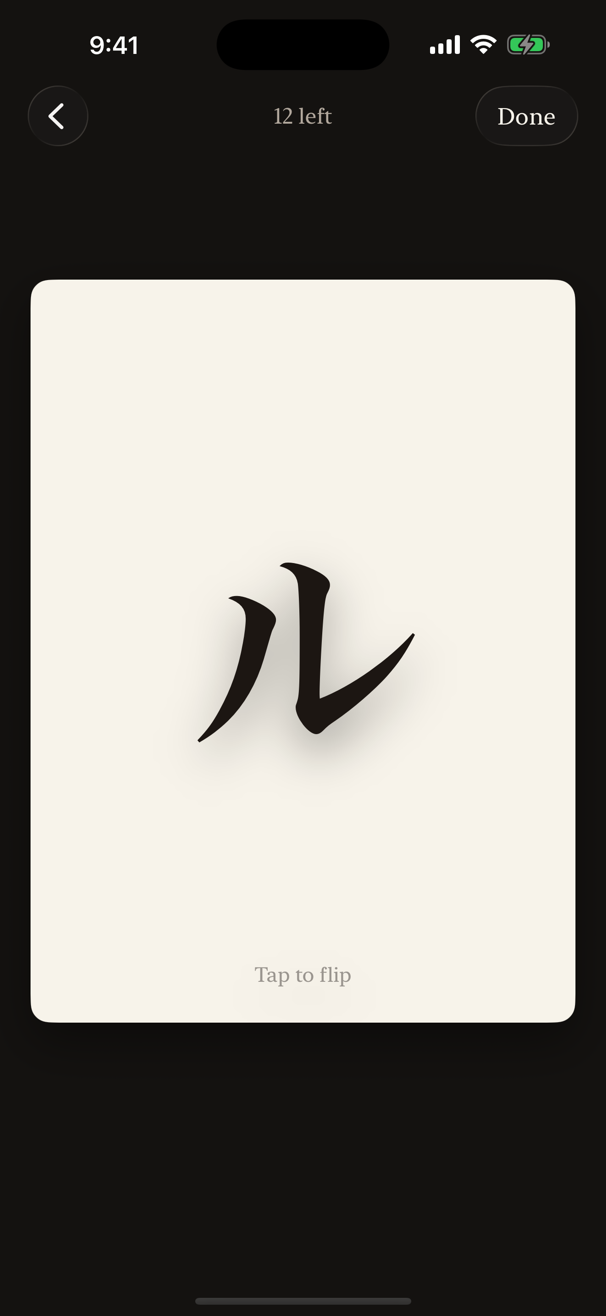
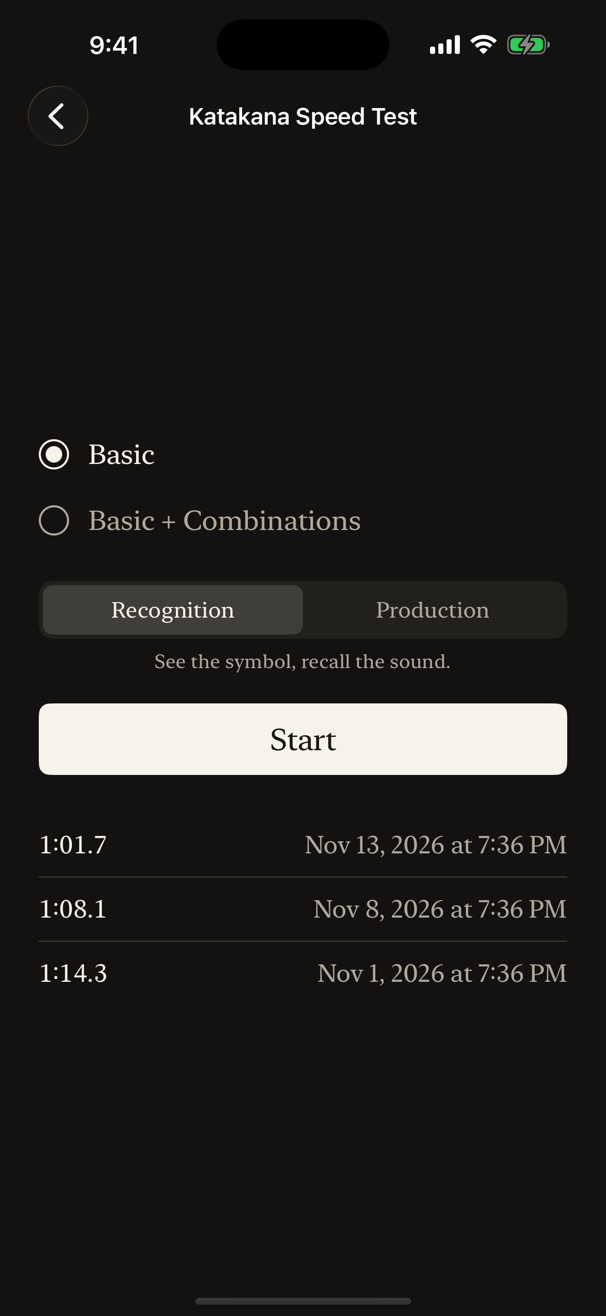
The trays a card moves between, a card waiting to be flipped, and a speed test with its past times.